instability: Photographs of the Unexpected

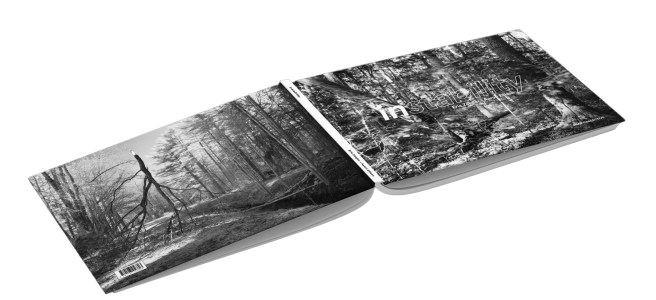
I’m pleased to announce the forthcoming publication of instability: Photographs of the Unexpected, a book of photographs created in collaboration with Eric Zeigler.


You can now pre-order instability, and the first 25 orders from the USA will also receive a signed photographic print from the book.
Pre-orders received by September 29 will be shipped to arrive by the winter holidays!


instability

Watch for long enough, and anything that appears to be stable will reveal its true perpetual state of instability. But imaging devices record single glances of the world: Crack! Trees fall, shutters snap, photographs are fixed. We have been conditioned to expect a photograph to capture decisive moments, but how do we know which ones are decisive? Further, when we overlay the fixed objectif-icity of still images on film, paper, and glowing screens onto our expectations of how the world “works,” we are subconsciously disregarding change and misinterpreting the instability of the reality we live in.

We visualize this instability in 145 images that we created from 2020 through 2024 using contemporary versions of 19th-century dry collodion glass plates, 20th-century film, and new digital technologies. We use these different methods to challenge interpretations of the assumed objective reality of a photograph and illuminate contradictions in 21st-century narratives of environmental stability and preservation. Following the suggestion of Walter Benjamin (in his Illuminations), we work to “attain a conception of history [and the present] that is in keeping with the tradition of the oppressed, which teaches us that thestate of emergencyin which we live is not the exception but the rule.” With our images, we reclaim the aesthetics behind the myths of the Westward Expansion, the American Frontier, and similar colonialist activities that have occurred throughout the world, and we record modern ecosystems deemed healthy and stable only because we’ve left them alone. For example, the economic progress flowing down rivers and onto the transcontinental railroads ironically created the context for preservation of old-growth forests—tiny islands of nature within a vast ocean of unchecked development. Are these reserves or theme parks? Are they really stable, unchanging, and, as the US National Park Service would have it, “unimpaired?” How are they connected to the human-modified environments around them? The essence of their ongoing and essential decay, normally hidden behind an opaque, yet gossamer fog, is unveiled in instability.


The first incarnation of instability was produced as an oversize (19 x 13-inch) “book dummy” entitled DoubleTake, which was entered into photobook competitions around the world. DoubleTake was chosen for inclusion in the 14th Annual Photobook Exhibition at the Griffin Museum of Photography in Winchester, Massachusetts, and it is now in their permanent collection. It also accompanied our solo exhibition of selected photographs in July 2024 at the Czong Institute for Contemporary Art in Gimpo, Republic of Korea, and has been accessed into their permanent collection, too. A smaller (9 x 6-inch), limited-edition version of DoubleTake accompanied our solo exhibition in August 2024 at Hartwick Pines State Park in Grayling, Michigan.

Finally, DoubleTake – now greatly expanded (from 51 to 145 images) and renamed instability – was chosen by the Danish publisher Snap Collective to be one of the photobooks they are publishing in 2024.


Learn more about, and see selected images from, instability here
Pre-order instability before September 29 to ensure delivery by the winter holidays.
The first 25 orders from the USA will also receive a signed photographic print from the book.
The unBalanced ecoLOGist: Hemlock Hospice [I]

Hemlock 023. Tony D'Amato in a Berkshire Old-growth Forest (color)
Figure 1 – University of Vermont professor of silviculture Anthony D’Amato with a 300+ year-old hemlock (Tsuga canadensis) tree in the old-growth forest on Mount Everett in western Massachusetts. Photo by David A. Orwig and copyright © Harvard Forest Archives, Harvard University

Throughout the eastern United States, one of our most iconic forest trees is dying. Eastern hemlock (a.k.a. Tsuga canadensis; Figure 1) is being sucked to death by a small insect, the hemlock woolly adelgid (a.k.a. Adelges tsugae). As a scientist, I study how our forests may respond to the loss of this “foundation” tree species.[i] As a human being, I cry, I mourn, and I look to the future for hope.

To reconcile the desire for knowledge and the emotional tearing that affects many of us who study eastern hemlock and all of us who are living with these fading trees,[ii] I have partnered with two artists—David Buckley Borden and Salua Rivero—to develop Hemlock Hospice: a collaborative, field-based installation that blends science, art, and design that [1] respects eastern hemlock and its ecological role as a foundation forest species; [2] promotes an understanding of the adelgid; and [3] encourages empathetic conversations among all the sustainers of and caregivers for our forests—ecologists and artists, foresters and journalists, naturalists and citizens—while fostering social cohesion around ecological issues.

Starting today, and over the next several weeks, we’ll be installing Hemlock Hospice in and around the oldest stand of eastern hemlocks in the Prospect Hill Tract at Harvard Forest, and I’m using this space to keep track of its background and progress. I’ll also be presenting an overview of Hemlock Hospice in a five-minute “ignite” talk at the Annual Meeting of the Ecological Society of America in Portland Oregon, August 6-11, 2017.[iii]

Continue reading “The unBalanced ecoLOGist: Hemlock Hospice [I]”

Dispatches from Abroad: A Khartoum Kick-off

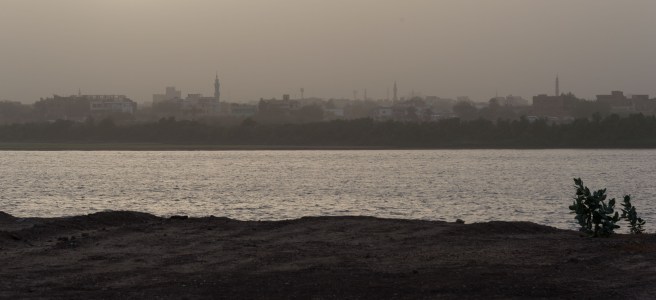
Well, I had hoped to finish writing my last post about Valparaiso before I left for another around-the-world journey, but… here I am in Khartoum, on the east bank of the Nile, and one must live—and write—in the present.

I left Boston for the long trip to Khartoum on the afternoon of Tuesday the 31st of January, just a few days after “45” (he-whose-name-shall-not-be-written) issued the now-stayed executive order banning immigration from seven countries, one of which is Sudan; ironically, and barely noted by the media, two decades of economic sanctions imposed by the US on Sudan had been lifted by President Obama a fortnight earlier, apparently with the agreement of incoming-45. My itinerary took me from Boston to New York to Frankfurt to Cairo to Khartoum, where I arrived at 03:30 local time on Thursday, about 32 hours, and four on-time flights (thanks JetBlue, Singapore Air, and EgyptAir!) after I had checked in at Boston. I was met plane-side on the tarmac by my hosts from the University of Khartoum School of Forestry, passed rapidly through Sudan’s passport control (far more rapidly than I expect to get through US CBP—given the two-page Sudanese visa that now graces the middle of my passport—when I return to LAX in mid-March after my sequential trips to Germany and Australia that follow my stay in Sudan), had a nice cup of tea in the VIP lounge, and finally settled in, around 05:00, at the University of Khartoum Guest House. My colleague, host, and former Ph.D. student, Asst. Prof. Ahmed Siddig of the Forestry School at the University of Khartoum, thoughtfully laid in a few snacks to tide me over until breakfast the same day. Although I slept through until 13:30, barely having enough time to scarf down a quick lunch before my first meeting (click on an image to see larger ones).


Continue reading “Dispatches from Abroad: A Khartoum Kick-off”

Dispatches from Abroad: Los Ascensores de Valparaiso

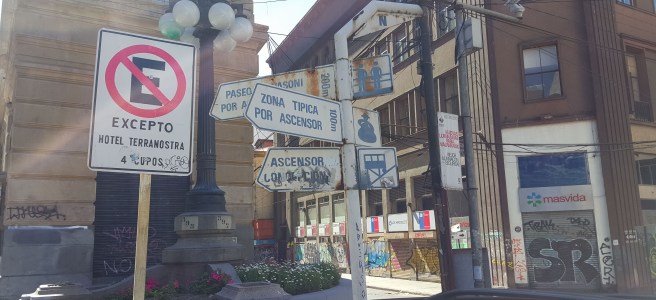
With but ten days to go before I leave for another extended overseas trip (a six-week journey that is taking me to Sudan, Germany, and Australia), I’m still catching up on visions of Valparaiso. This post has a small parallel with the incredible displays of political energy in yesterday’s marches all over the US and around the world, in which good people everywhere spoke out against the forces of darkness threatening us all.

As I wrote in my last post, Valparaiso gives me hope. Long a hotbed of activism, activists, artists, and art, Valparaiso (and much of Chile) was in the midst of a municipal workers’ strike while I was there in November, a strike in protest of the inequitable private pension system that was set up in 1981 under the military dictatorship of Augusto Pinochet. As a visiting researcher and occasional tourist, I learned some things about the underlying issues, and also witnessed one of its impacts on a central attraction of the city—its ascensores.

Continue reading “Dispatches from Abroad: Los Ascensores de Valparaiso”

Dispatches from Abroad: Ciao Belém – foi um grande momento!

Perched in the São Paulo airport, in between Belém and Houston, thence to Boston, my 14-month sabbatical is coming to what seems an all-to-soon close. But it has been an awesome year, capped by a really excellent two-and-a-half weeks working with Rogério Silva, mostly in the rainforest at Caxiuanã. But Belém deserves mention, too. A sprawling, filthy, and yet exuberant city of more than 2 million people perched near the mouth of the Amazon River, it has a waterfront with pedestrian esplanades, museums and forts, working docks, and an iron market with all sorts of delicacies from the Amazon basin. And at least one superb restaurant. In this post, I share four of my most notable memories of Belém: a cool breeze, the flanelas, the iron market/waterfront, and a dinner out.

Continue reading “Dispatches from Abroad: Ciao Belém – foi um grande momento!”

The unBalanced ecoLOGogist: Up The River and into The Woods

Having spent the better part of two weeks moving down the Amazon River from Tabatinga to Belém, I’m now in the midst of the last 2-1/2 weeks of my year-long sabbatical leave, working on all things ants with my friend and colleague Rogério Silva at the Museu Paraense Emilio Goeldi. Rogério and I have been working on ecological similarities and differences between temperate and tropical ants. He’s visited me twice at Harvard Forest and now, with support from the Museum in Belém, I have an opportunity to learn first-hand about the ants of the Brazilian rainforest.

But first we have to get there.

Continue reading “The unBalanced ecoLOGogist: Up The River and into The Woods”

Dispatches from Abroad: Down the Amazon (III) – Manaus to Belém

Ashore in Belém after five days and four nights on the Amazon and its tributaries on board the Amazon Star, here’s the travel-blog of what I though would be my final trip on the Amazon. But in truth, I’ll head back upriver on Wednesday for 11 days of field work… more on that coming up!

23 November 2016

Up at dawn, lock the duffel, stow the laptop, scarf down fruit, granola, chocolate cake, and tea at the Go-Inn Manaus buffet, and head for the river.

Continue reading “Dispatches from Abroad: Down the Amazon (III) – Manaus to Belém”

Dispatches from Abroad: Down the Amazon (II) – Washed up in Manaus

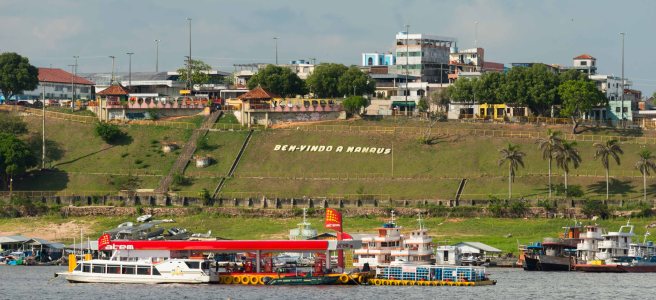
My riverine interlude between Leticia and Belém has been punctuated by a stopover in Manaus, a bustling industrial and most unlikely city of more than 2 million people located at the junction of the Rio Negro and the Rio Solimões. Following the 4-day, 3-night boat trip from Tabatinga described in the first part of this travel-blog, I arrived at Manaus late Saturday. A long walk up the floating ramp brought me in sight of the famous plaque of river heights, a wonderful example of “physical” data visualization (for more, check out this web-site: http://dataphys.org/list/ which I recently discovered thanks to my friend and colleague David Buckley Borden).

manaus-levels-20161119-ame-154724
Maximum heights of the Rio Negro at the Port of Manaus

As I well knew, 2015 was one of the highest levels on record, surpassed only by 2012 and just barely by 2009. The four years 2012-2015 were in the top 10 since records began more than a century ago, whereas 2016 was in the lower-middle of the pack. A great classroom exercise would be to digitize and plot these data relative to other indicators of climatic change.

I had hoped that I’d spend a couple of nights in Manaus and then catch a boat on Monday further downriver to Belém. I learned Sunday morning, though, that direct boats to Belém leave only Wednesdays and Saturdays. So rather than take a boat Monday to Santarem and then chill there for another boat onward to Belém, I opted to book the Wednesday boat and spend a couple of extra days exploring Manaus.

Continue reading “Dispatches from Abroad: Down the Amazon (II) – Washed up in Manaus”