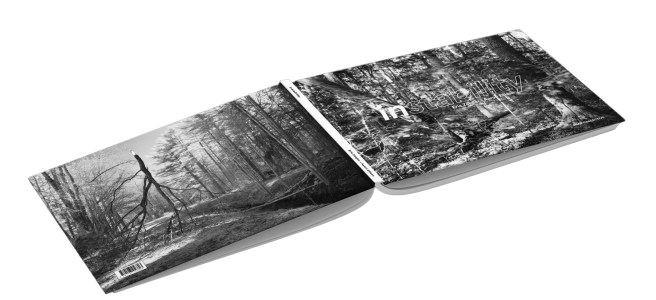
instability: Photographs of the Unexpected

I’m pleased to announce the forthcoming publication of instability: Photographs of the Unexpected, a book of photographs created in collaboration with Eric Zeigler.


You can now pre-order instability, and the first 25 orders from the USA will also receive a signed photographic print from the book.
Pre-orders received by September 29 will be shipped to arrive by the winter holidays!


instability

Watch for long enough, and anything that appears to be stable will reveal its true perpetual state of instability. But imaging devices record single glances of the world: Crack! Trees fall, shutters snap, photographs are fixed. We have been conditioned to expect a photograph to capture decisive moments, but how do we know which ones are decisive? Further, when we overlay the fixed objectif-icity of still images on film, paper, and glowing screens onto our expectations of how the world “works,” we are subconsciously disregarding change and misinterpreting the instability of the reality we live in.

We visualize this instability in 145 images that we created from 2020 through 2024 using contemporary versions of 19th-century dry collodion glass plates, 20th-century film, and new digital technologies. We use these different methods to challenge interpretations of the assumed objective reality of a photograph and illuminate contradictions in 21st-century narratives of environmental stability and preservation. Following the suggestion of Walter Benjamin (in his Illuminations), we work to “attain a conception of history [and the present] that is in keeping with the tradition of the oppressed, which teaches us that thestate of emergencyin which we live is not the exception but the rule.” With our images, we reclaim the aesthetics behind the myths of the Westward Expansion, the American Frontier, and similar colonialist activities that have occurred throughout the world, and we record modern ecosystems deemed healthy and stable only because we’ve left them alone. For example, the economic progress flowing down rivers and onto the transcontinental railroads ironically created the context for preservation of old-growth forests—tiny islands of nature within a vast ocean of unchecked development. Are these reserves or theme parks? Are they really stable, unchanging, and, as the US National Park Service would have it, “unimpaired?” How are they connected to the human-modified environments around them? The essence of their ongoing and essential decay, normally hidden behind an opaque, yet gossamer fog, is unveiled in instability.


The first incarnation of instability was produced as an oversize (19 x 13-inch) “book dummy” entitled DoubleTake, which was entered into photobook competitions around the world. DoubleTake was chosen for inclusion in the 14th Annual Photobook Exhibition at the Griffin Museum of Photography in Winchester, Massachusetts, and it is now in their permanent collection. It also accompanied our solo exhibition of selected photographs in July 2024 at the Czong Institute for Contemporary Art in Gimpo, Republic of Korea, and has been accessed into their permanent collection, too. A smaller (9 x 6-inch), limited-edition version of DoubleTake accompanied our solo exhibition in August 2024 at Hartwick Pines State Park in Grayling, Michigan.

Finally, DoubleTake – now greatly expanded (from 51 to 145 images) and renamed instability – was chosen by the Danish publisher Snap Collective to be one of the photobooks they are publishing in 2024.


Learn more about, and see selected images from, instability here
Pre-order instability before September 29 to ensure delivery by the winter holidays.
The first 25 orders from the USA will also receive a signed photographic print from the book.
The unBalanced ecoLOGist: Hemlock Hospice [II]

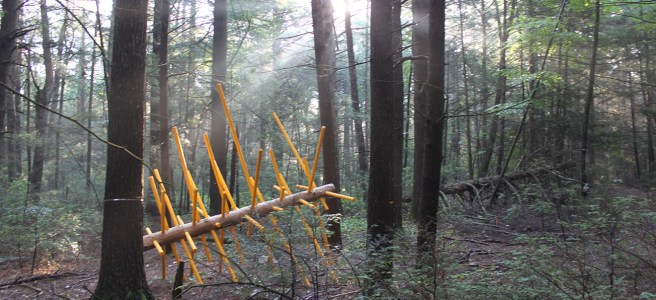
Hemlock Hospice opens to the public on October 7, 2017 at noon, and will be up for more than a year (through November 18, 2018). We have a website, a schedule of events for the opening reception, and are putting the finishing touches on the last of more than a dozen sculptural pieces emplaced thoughtfully throughout a new interpretive trail within the Prospect Hill Tract at the Harvard Forest. A substantial outreach effort is leading to press coverage, interviews, seminar invitations, etc., especially in the art world. Scientists, though, generally are a bit more muted in their response or apparent interest. Why might that be?

In pursuit of an answer, I explore here the importance of empathy in field research.

empathy, n. “The ability to understand and appreciate another person’s feelings, experience, etc.”

Oxford English Dictionary (OED) online, June 2017. Accessed 10 September 2017

Continue reading “The unBalanced ecoLOGist: Hemlock Hospice [II]”

The unBalanced ecoLOGist: Hemlock Hospice [I]

Hemlock 023. Tony D'Amato in a Berkshire Old-growth Forest (color)
Figure 1 – University of Vermont professor of silviculture Anthony D’Amato with a 300+ year-old hemlock (Tsuga canadensis) tree in the old-growth forest on Mount Everett in western Massachusetts. Photo by David A. Orwig and copyright © Harvard Forest Archives, Harvard University

Throughout the eastern United States, one of our most iconic forest trees is dying. Eastern hemlock (a.k.a. Tsuga canadensis; Figure 1) is being sucked to death by a small insect, the hemlock woolly adelgid (a.k.a. Adelges tsugae). As a scientist, I study how our forests may respond to the loss of this “foundation” tree species.[i] As a human being, I cry, I mourn, and I look to the future for hope.

To reconcile the desire for knowledge and the emotional tearing that affects many of us who study eastern hemlock and all of us who are living with these fading trees,[ii] I have partnered with two artists—David Buckley Borden and Salua Rivero—to develop Hemlock Hospice: a collaborative, field-based installation that blends science, art, and design that [1] respects eastern hemlock and its ecological role as a foundation forest species; [2] promotes an understanding of the adelgid; and [3] encourages empathetic conversations among all the sustainers of and caregivers for our forests—ecologists and artists, foresters and journalists, naturalists and citizens—while fostering social cohesion around ecological issues.

Starting today, and over the next several weeks, we’ll be installing Hemlock Hospice in and around the oldest stand of eastern hemlocks in the Prospect Hill Tract at Harvard Forest, and I’m using this space to keep track of its background and progress. I’ll also be presenting an overview of Hemlock Hospice in a five-minute “ignite” talk at the Annual Meeting of the Ecological Society of America in Portland Oregon, August 6-11, 2017.[iii]

Continue reading “The unBalanced ecoLOGist: Hemlock Hospice [I]”

The unBalanced ecoLOGist: Help Science Meet Art at ESA 2017 (I)

I’m taking a day off from writing about my scientific and culinary adventures in China, and turning my attention to science and art. I spend a lot of time thinking about the relationship between science and art, but not in the way that it is mostly written and talked about, which is art drawing influence from science and technology, and reinterpreting it for different audiences. Rather, I’m particularly interested in how science and scientists – which in my case means ecology and ecologists – have been and continue to be influenced by art and the humanities in general. I’ve even written a couple of papers on the subject, which you can read elsewhere on this site.

But right now, I’m working with Carri LeRoy, a faculty member at the Evergreen State College in Washington State, to organize an “ignite” session for next summer’s Ecological Society of America meetings, to be held in Portland, Oregon. If you’re interested in this topic, and want to give a talk/presentation/exhibition or join the discussion, then…

Continue reading “The unBalanced ecoLOGist: Help Science Meet Art at ESA 2017 (I)”

The unBalanced ecoLOGist Abroad: In the Footsteps of the Giant Panda (II)

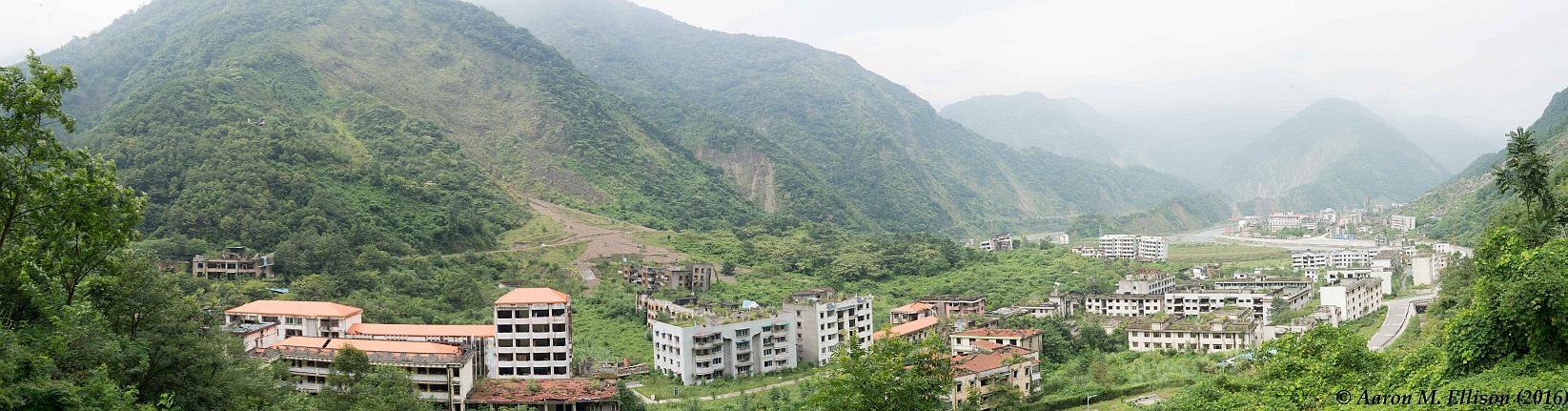
We had hoped to get to the Wolong Panda Reserve, but the roads, damaged by the 12.V.2008 Wenchuan earthquake (mganitude 8.0) and more recently by heavy rains and flooding, were not passable. We re-routed to Beichuan, which was the city closest to the epicenter of the earthquake, the ruins of which have been left standing as a memorial to the >87,000 people who died and > 15,000,000 who were displaced and relocated.

Beichan-20160831-AME-small
Beichuan ruins

BeichanMuseum-20160831-AME-small
Wenchuan earthquake museum grounds

We did pass through what had been panda reserve lands, but which now, more than eight years after the earthquake, have few, if any, pandas remaining. All the pandas that had been at the Wolong breeding center were relocated after the earthquake to Chengdu (see yesterday’s post, below).

Continue reading “The unBalanced ecoLOGist Abroad: In the Footsteps of the Giant Panda (II)”